Korean Bibimbap
Uitgelicht onder: Klassieke wereldwijde favorieten
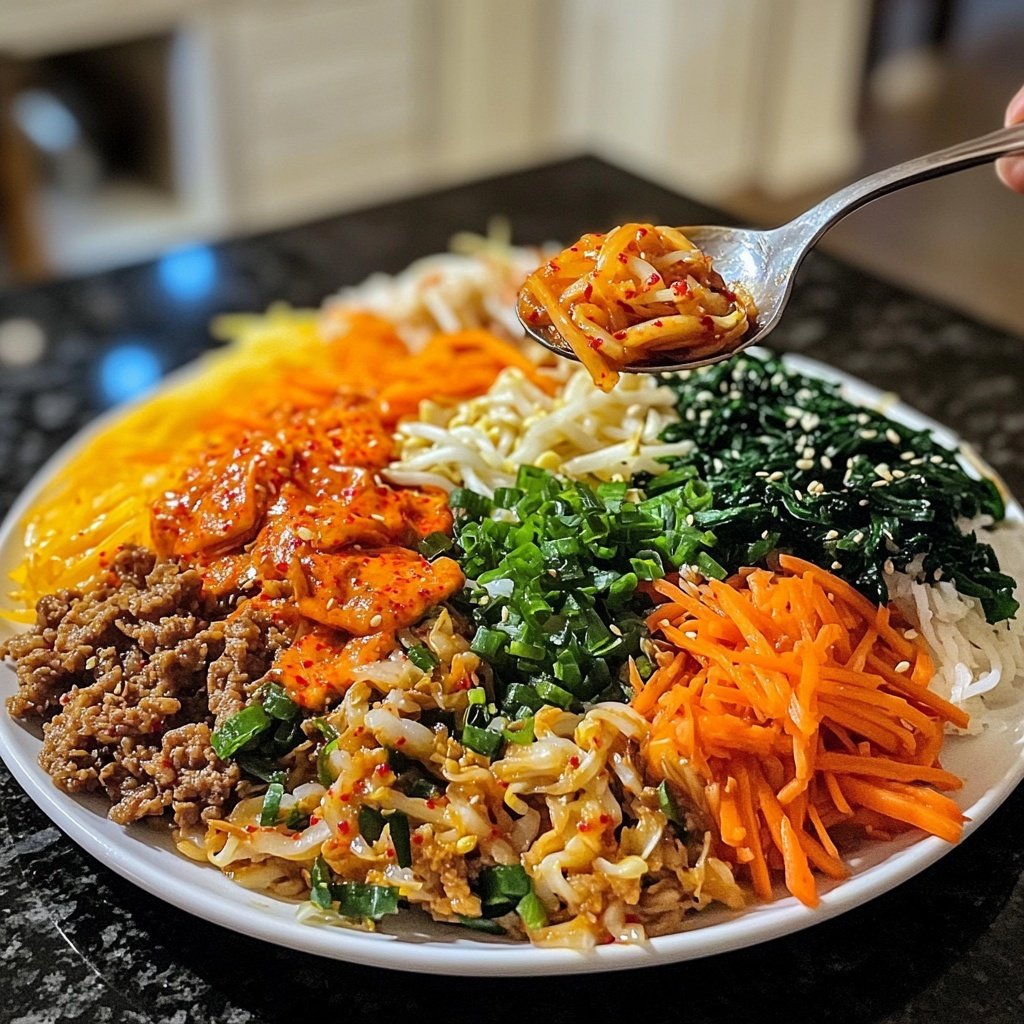
Korean Bibimbap is a vibrant and delicious dish that combines rice, vegetables, and protein for a wholesome meal.
Korean Bibimbap is not just a meal; it's a celebration of colors, flavors, and textures. Each ingredient brings its unique taste, making every bite an adventure.
Why You'll Love This Recipe
- A harmonious blend of flavors with every bite
- Customizable with your favorite proteins and veggies
- A feast for the eyes and the palate
The Origins of Bibimbap
Bibimbap, a beloved Korean dish, has its roots in a practice called 'banchan,' where various side dishes are served alongside rice. This colorful meal reflects the harmony of flavors and textures that define Korean cuisine. Traditionally, bibimbap was a way to use up leftovers by combining them with rice, creating a delicious and nutritious one-bowl meal.
The name 'bibimbap' literally means 'mixed rice.' The dish gained popularity during the Joseon Dynasty, where it was served as an elegant meal for the royal court. Today, bibimbap is enjoyed by people around the world, celebrated not only for its taste but also for its visual appeal, showcasing a vibrant array of vegetables and toppings.
Nutritional Benefits
Korean Bibimbap is not only a feast for the eyes but also a powerhouse of nutrition. With a base of white rice and a variety of vegetables, this dish is rich in vitamins and minerals. Spinach, for example, is packed with iron and antioxidants, while carrots provide beta-carotene, essential for eye health.
Additionally, by incorporating your choice of protein—be it tofu, chicken, or beef—you can tailor the dish to meet your dietary needs. The use of gochujang adds a unique flavor profile while also providing health benefits, such as boosting metabolism and enhancing digestion.
Customizing Your Bibimbap
One of the best features of bibimbap is its versatility. You can easily customize it to suit your taste preferences or dietary restrictions. For a vegetarian option, simply skip the egg or replace it with tofu. If you're a fan of spicy food, feel free to add more gochujang or even some kimchi for an extra kick.
Moreover, the type of vegetables used can vary based on the season or what you have on hand. While traditional bibimbap includes carrots, zucchini, and mushrooms, feel free to experiment with bell peppers, radishes, or even leafy greens. This flexibility allows you to create a dish that's uniquely yours.
Ingredients
For the Bibimbap
- 2 cups cooked white rice
- 1 cup spinach, blanched and squeezed dry
- 1 cup bean sprouts, blanched
- 1 cup carrots, julienned
- 1 cup zucchini, julienned
- 4 eggs
- 1 cup shiitake mushrooms, sliced
- 2 tablespoons sesame oil
- 1 tablespoon gochujang (Korean chili paste)
- 1 tablespoon soy sauce
- Sesame seeds for garnish
- Green onions, chopped for garnish
Feel free to add any additional toppings or proteins of your choice!
Instructions
Prepare the Vegetables
Heat sesame oil in a pan and sauté the carrots, zucchini, and mushrooms separately until tender. Set aside.
Cook the Eggs
In the same pan, fry the eggs sunny-side up until the whites are set but the yolks remain runny.
Assemble the Bibimbap
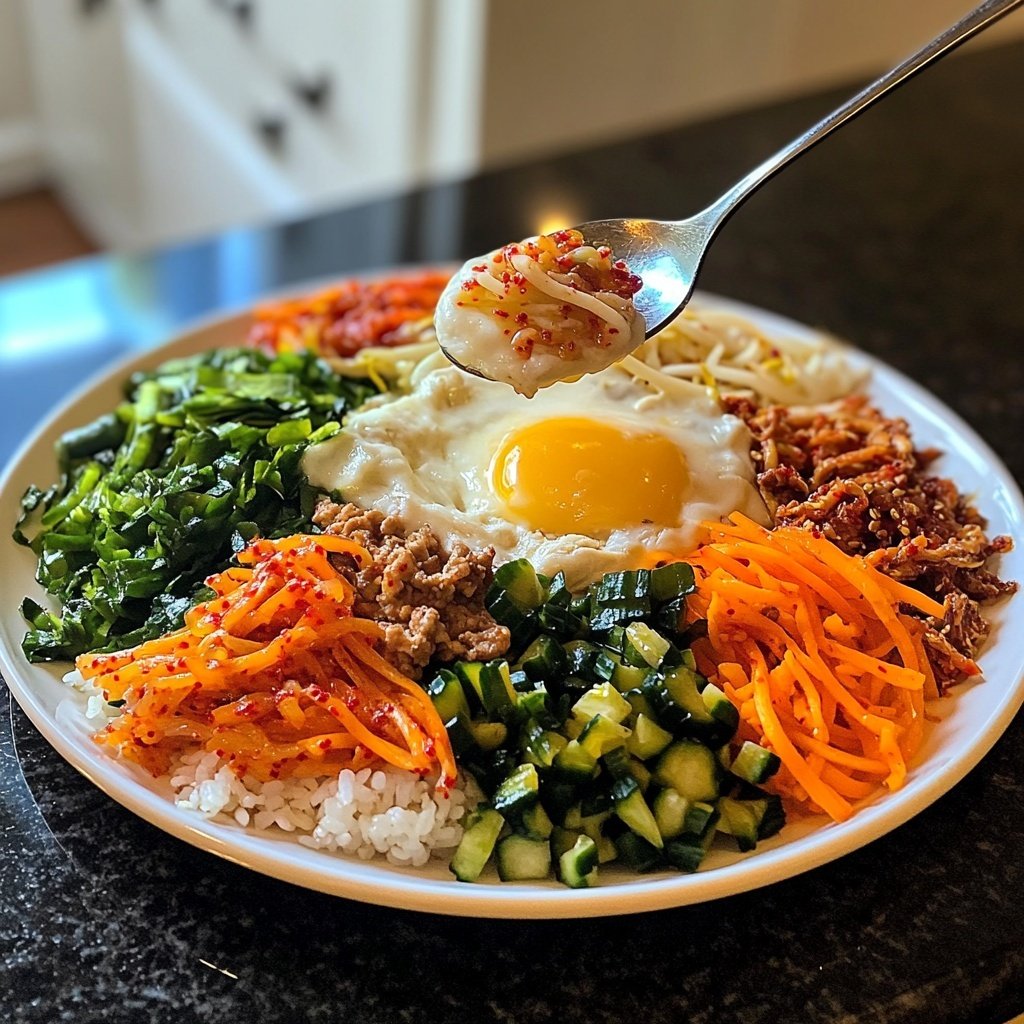
In a large bowl, place the cooked rice as the base. Arrange the sautéed vegetables, spinach, and bean sprouts on top. Add the fried egg in the center.
Serve
Drizzle with soy sauce and gochujang to taste. Garnish with sesame seeds and green onions. Mix everything together before eating.
Enjoy your delicious homemade Korean Bibimbap!
Professionele Tips
- Feel free to customize your Bibimbap with different vegetables or proteins such as beef, chicken, or tofu.
Storing Leftovers
If you find yourself with leftover bibimbap, don't worry! This dish stores well in the refrigerator. Simply place it in an airtight container and consume it within 2-3 days for the best flavor and texture. When reheating, add a splash of water to prevent the rice from becoming too dry, and heat it in the microwave until warm.
For a quick meal, you can also repurpose leftover bibimbap into a fried rice dish. Just sauté the mixture in a pan with a bit of oil and a splash of soy sauce until heated through. This not only saves time but also adds a delightful twist to the original recipe.
Pairing Suggestions
To enhance your bibimbap experience, consider pairing it with traditional Korean side dishes, known as 'banchan.' Popular options include kimchi, pickled radishes, or a light cucumber salad. These sides complement the flavors of bibimbap and add an extra dimension to your meal.
For beverages, a cold glass of barley tea or a light Korean beer can beautifully balance the dish's flavors. If you're looking for a non-alcoholic option, try serving it with a refreshing iced green tea, which helps cleanse the palate between bites.
Experimenting with Sauces
While gochujang is the star condiment for bibimbap, don't hesitate to explore other sauces that can elevate your dish. A drizzle of sesame oil adds a nutty flavor, while a sprinkle of vinegar can introduce a pleasant tang. You can also create a creamy sauce using tahini or yogurt mixed with a touch of lemon juice.
For those who enjoy experimenting, consider making a spicy peanut sauce or a miso dressing to drizzle over your bibimbap. Each of these options can transform your meal and offer new flavor combinations to enjoy!
Vragen Over Recepten
→ Can I make Bibimbap vegetarian?
Absolutely! You can skip the egg or use a plant-based alternative.
→ What can I substitute for gochujang?
You can use sriracha or a mix of chili powder with a little sugar as an alternative.
→ How long does Bibimbap last in the fridge?
It can last up to 3 days in the refrigerator when stored in an airtight container.
→ Can I use brown rice instead of white rice?
Yes, brown rice is a healthier option and works well in Bibimbap.
Korean Bibimbap
Gemaakt door: June Weatherby
Recepttype: Klassieke wereldwijde favorieten
Vaardigheidsniveau: Intermediate
Eindportie: 4 servings
Wat je Nodig Hebt
For the Bibimbap
- 2 cups cooked white rice
- 1 cup spinach, blanched and squeezed dry
- 1 cup bean sprouts, blanched
- 1 cup carrots, julienned
- 1 cup zucchini, julienned
- 4 eggs
- 1 cup shiitake mushrooms, sliced
- 2 tablespoons sesame oil
- 1 tablespoon gochujang (Korean chili paste)
- 1 tablespoon soy sauce
- Sesame seeds for garnish
- Green onions, chopped for garnish
Stappen
Heat sesame oil in a pan and sauté the carrots, zucchini, and mushrooms separately until tender. Set aside.
In the same pan, fry the eggs sunny-side up until the whites are set but the yolks remain runny.
In a large bowl, place the cooked rice as the base. Arrange the sautéed vegetables, spinach, and bean sprouts on top. Add the fried egg in the center.
Drizzle with soy sauce and gochujang to taste. Garnish with sesame seeds and green onions. Mix everything together before eating.
Extra Tips
- Feel free to customize your Bibimbap with different vegetables or proteins such as beef, chicken, or tofu.
Voedingswaarde (Per Portie)
- Calories: 500 kcal
- Total Fat: 20g
- Saturated Fat: 4g
- Cholesterol: 186mg
- Sodium: 600mg
- Total Carbohydrates: 65g
- Dietary Fiber: 7g
- Sugars: 5g
- Protein: 16g